You are hereself-tonometry
self-tonometry

Recommended Doctors - Posting Rules
In this forum you may post information about doctors you know to be supportive of home eye pressure monitoring. In my experience, most ophthalmologists and doctors of optometry will offer support to motivated patients who wish to monitor their eye pressure at home. However, some doctors are enthusiastic while others are reluctant. If your current doctor is reluctant to support your desire to do home monitoring, you can help educate your doctor.
Many FitEyes members have won over their doctors by simply discussing the topic with them. Sometimes it takes more than one discussion.
Why guess about your eye pressure when you can know?
I have had my tonometer for almost 6 months. It has answered a multitude of questions about how my daily routine affects my health. I didn't know, for example, that just taking a walk outside for a half hour or so would reduce my eye pressure, sometimes by as much as 50%. I also didn't know that I wasn't one of the people whose pressures are higher at night--in fact my lowest pressures are at night. (That was good news. I was tired of sleeping with my head elevated).
I have found no supplements that had any effect on lowering my IOP, but I have found that some supplements will raise my IOP quite significantly. I know that out of control thoughts and periods of stress significantly raise my IOP in spite of the two drops I am using or any other healthy lifestyle choices I am making.
Read more...
My experiences with self-tonometry
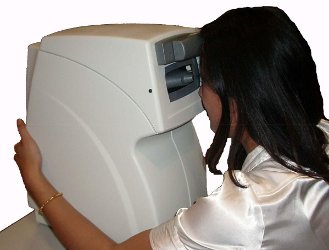
I have been part of FitEyes since 2006 and I bought my tonometer in late 2006. I've been using it almost every day since then. I am very calm about measuring my IOP perhaps 2 or 4 times a day (or sometimes not at all if away from home).
While away from home I use drops 'just in case'; at home I might go for several days with no drops while I monitor my IOP with my tonometer .
Self-tonometry gives me freedom from medications that give me unwanted side effects. At the beginning of my 'career' (as a glaucoma patient) those medications nearly killed me. (I had some serious heart-related side effects.)
Self-tonometry is wonderfully liberating. With the reduction in my glaucoma medications I have no more dry eyes.

Are handheld or portable tonometers appropriate for home eye pressure monitoring?
In any tonometer (based on today's technology), you can have some, but not all of, the following:
- ease of use
- accuracy (reliability and validity of data)
- low cost
- portability
People tend to give a priority to portability and low cost. New products aimed at this feature set have recently been announced. Does it make sense to utilize those devices for self-tonometry?
We have to agree that any trade off that doesn't include reliability and validity of IOP data invalidates the whole endeavor of self-tonometry. Not only is it meaningless to do it if the data is not of sufficient quality upon which to make important decisions, but it could actually be detrimental to do self-tonometry in that case.
With today's technologies, portability entails user-alignment (in the context of self-tonometry). Proper user-alignment to produce a valid measurement, by definition, depends upon user skill as well as various specific conditions of each measurement. User-alignment, regardless of the tonometer, is difficult! (User-alignment is defined as the operator of the tonometer having to align the tonometer with the eye manually. Alignment is a very precise process requiring a steady hand, good eyesight, training and practice.)
Therefore, the requirement of user-alignment conflicts with the requirement of reliability and validity of IOP data. We cannot guarantee reliability and validity of IOP data when variable user skills are required to produce that data.
If any decent ophthalmologist or scientist (or intelligent thinker) considers a set of IOP data, they must consider how the data was obtained. If patient skill played a critical role in producing that data, as it does when user-alignment is required, the clear thinking person will immediately discount that data. Therefore, the self-tonometrist's efforts may not produce much of value.

Leading Medical Specialists From Around the World Coalesce Around Self-Tonometry
Leading Medical Specialists Support Self-Monitoring of Eye Pressure by Glaucoma Patients;
Self-tonometry has Potential to Transform Glaucoma Treatment, Says Co-Author of Recent Journal Article
Growing recognition among leading ophthalmologists and glaucoma specialists of an alternative option for measuring pressure in the eye may offer new hope for four million Americans – and millions more people worldwide – who risk permanent blindness, says a co-author of a recent article in the Survey of Ophthalmology.
Home Eye Pressure Monitoring Recommended
Millions of people around the world should be monitoring their eye pressure (intraocular pressure) at home, according to health organizations (such as International Society for Self-Tonometry (ISST)) that are issuing recommendations on what to do and how to do it. Many experts, such as Dr. Graham Lee, feel the evidence is quite strong that home eye pressure monitoring leads to better control of intraocular pressure, and the evidence is quite strong that intraocular pressure control lowers the risk of glaucoma progression and optic nerve cell death.
New York and Florida - Two doctors who support self-tonometry
Dr. Christopher Teng, New York, New York - Supportive of self-tonometry
Dr Alexei Moraczewski, Winter Haven, Florida - Supportive of self-tonometry
Dr. Janet A Betchkal, MD - Jacksonville, FL USA - Not supportive
Dr. Janet A Betchkal, MD has not taken the time to educate herself about self-tonometry and she is generally dismissive and not supportive of the practice. It is possible this will change in the future if one or more of her patients helps educate her.

New York City - Robert Ritch, MD - Highly Supportive of Self-Tonometry
There may not be any ophthalmologist anywhere who is more interested in self-tonometry than Dr. Robert Ritch in New York City. People come from all over the world to see him. He is one of the top glaucoma specialists in the world.
See this blog post for more about Dr. Ritch:
http://fiteyes.com/Robert-Ritch-Glaucoma-Specialist
See these links for more information, including his office locations:
Northwest Ohio Doctor Feedback Regarding Self-Tonometry Support
The only Glaucoma specialist in Northwest Ohio last year was ...
I don't want my whole life to be consumed with intraocular pressure
I don't want my whole life to be consumed with IOP, but obviously most things that are good for our health in general are good for our eyes.
I have been tossed in the middle of the ocean and been told I better learn to swim!
Hello - I feel as though I have been tossed in the middle of the ocean and been told I better learn to swim! I've been a glaucoma suspect for 15 or 20 years. I'm now a "strong" suspect and have some damage in both eyes. My pressure is now 21 and 22. From what the doctor has said, I won't be surprised if he puts me on drops next time.
I'm now going in for pressure readings every 3 months.
Self-tonometry makes such good sense, but my glaucoma specialist doesn't seem to understand why I would want to do that or why it would be beneficial. So - I'm gently "chipping away" at him and perhaps I will someday get his permission.
Can you feel your eye pressure before checking with the tonometer?
As a user of tonometry are you aware of your IOP before you do the tonometer. That is, can you feel what your IOP is likely to be before you check the pressure based on your activity before checking or your mood or emotional state?
I ask this since some people have said that they sense when their IOP is higher than usual ie., they feel the pressure. Do you feel or sense the pressure and if so has the tonometer coincided with what you think your IOP might be?
Thanks
A
Self-Tonometry Participation Requirements
Hi Dave - What is required to participate in the self-tonometry research group? I have heard about the special tonometer pricing available through FitEyes. What do I have to do to qualify for those discounts? Thank you.
Tom
I am trying to take life easy but I note that my high eye pressures does not come down
The following is part of a conversation between Dave and a new member of the FitEyes self-tonometry research community.
I am trying to take life easy but I note that the high pressures do not come down.
Questions about my eye pressure measurements and the FitEyes Insight software
I just installed the FitEyes Insight software yesterday. I have a few questions so far.

New Features Just Added to FitEyes Insight Webpage
Log in to your account at insight.fiteyes.com and you will notice a new feature that lets you edit the notes for your eye pressure readings right on the webpage! Check it out.
More new features are on the way.

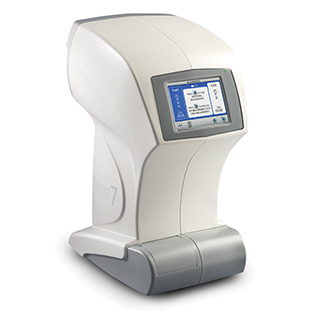
How to Install FitEyes Insight Application for Reichert 7CR on Windows

You will need the FitEyes Insight software (which includes the Reichert 7CR USB driver) and a USB cable. The software is available to individuals who have obtained a tonometer through FitEyes.com. We also have to add your email address to the list of users approved for FitEyes Insight in advance of you doing these steps.
7CR Tonometer settings
Have your tonometer manual handy so you can see which icons to press on the screen. In particular the menu icon is the square with 3 colored horizontal lines inside. See the manual for a picture.

Two Ways of Healing Glaucoma
Marketing messages teach us to look for solutions in the form of a pill or an easy fix. Glaucoma taught me that this brand of alternative medicine is fundamentally equal to allopathic medicine. In fact, the business model is identical and many of the same pharmaceutical companies are behind the "natural" supplements and the allopathic drugs. (The mindset is also nearly identical -- it is the mindset of looking for a solution without fundamentally changing ourselves.)
I carefully tested high levels of vitamin C over a number of years. Vitamin C was actually the first thing I focused on after being diagnosed with glaucoma. I used it before beginning self-tonometry and I continued for several years after starting self-tonometry.
In those first two years (before self-tonometry) the vitamin C did not prevent my glaucoma from progressing. And I found out after I got a tonometer that it did not reduce my IOP. I used 30 grams per day while testing its effect on my IOP. My IOP is lower today on zero vitamin C (as a result of the knowledge I gained from self-tonometry).
The reason it is important to focus on IOP is because it is the only treatable risk factor for glaucoma. And it is very important to have metrics. No matter what we are doing (vitamins, diet, etc.), we need to have some way to measure the results.
And the wisely empirical approach advocated by FitEyes does often involve testing one element at a time. That's the way we make discoveries and progress past ignorance. Unlike almost any other patient support group in the world, FitEyes has a track record of discovering new knowledge. (We discovered and documented white coat ocular hypertension, for example.) That's why this is a research community at its core.

Surely its perfectly normal for eye pressure to go up and down
surely its perfectly normal for eye pressure to go up under certain circumstances. Just like our bp goes up and down. anne
We now know that intraocular pressure does respond to events in our lives, to our state of mind and emotions and to stress. However, before FitEyes came along in 2006 (and for several years afterwards) these facts were not recognized.
See this FitEyes article from Feb 2007:
http://fiteyes.com/Does-Stress-Increase-Eye-Pressure-For-Everyone
The standard medical opinion is that stress does not affect eye pressure (intraocular pressure). For example, see "Glaucoma - Frequently Asked Questions" at The Eye Institute states:
"As far as we know, stress does not affect eye pressure or the health of the optic nerve."
Another example of the prevailing medical opinion can be found in a Wills Glaucoma chat transcript on Stress and Glaucoma from July 20, 2005:
Patient: Does being nervous or stressed increase the IOP (intraocular pressure) as it does blood pressure?
Dr. Elliot Werner: Not as far as we know.
Even today many ophthalmologists will deny that stress affects intraocular pressure. They will further deny that non-stressful events such as Bailey described could affect eye pressure.