You are hereglaucoma
glaucoma
Inflammation in Glaucoma
All glaucomas have a final common pathway of retinal ganglion cell death involving low-grade inflammation, oxidative damage, mitochondrial dysfunction, and glial hyperactivation.
My experiences with self-tonometry
I have been part of FitEyes since 2006 and I bought my tonometer in late 2006. I've been using it almost every day since then. I am very calm about measuring my IOP perhaps 2 or 4 times a day (or sometimes not at all if away from home).
While away from home I use drops 'just in case'; at home I might go for several days with no drops while I monitor my IOP with my tonometer .
Self-tonometry gives me freedom from medications that give me unwanted side effects. At the beginning of my 'career' (as a glaucoma patient) those medications nearly killed me. (I had some serious heart-related side effects.)
Self-tonometry is wonderfully liberating. With the reduction in my glaucoma medications I have no more dry eyes.

Complementary Therapy for the Treatment of Glaucoma by Robert Ritch
by Robert Ritch, MD
From the Departments of Ophthalmology, The New York Eye and Ear Infirmary, New York, NY, and The New York Medical College, Valhalla, NY
Supported in part by the Joseph and Marilyn Rosen Research Fund of the New York Glaucoma Research Institute
Corresponding author: Robert Ritch, MD, Glaucoma Associates of New York, The New York Eye and Ear Infirmary, 310 East 14th Street suite 304, New York, NY, 10003
Glaucoma is a progressive optic neuropathy characterized by a specific pattern of optic nerve head and visual field damage. Damage to the visual system in glaucoma is due to the death of the retinal ganglion cells, the axons of which comprise the optic nerve and carry the visual impulses from the eye to the brain. Glaucoma represents a final common pathway resulting from a number of different conditions that can affect the eye, many of which are associated with elevated intraocular pressure (IOP). It is important to realize that elevated IOP is not synonymous with glaucoma, but rather is the most important risk factor we know of for the development and/or progression of glaucomatous damage.

Leading Medical Specialists From Around the World Coalesce Around Self-Tonometry
Leading Medical Specialists Support Self-Monitoring of Eye Pressure by Glaucoma Patients;
Self-tonometry has Potential to Transform Glaucoma Treatment, Says Co-Author of Recent Journal Article
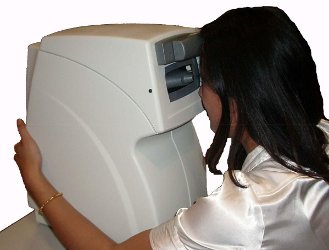
Growing recognition among leading ophthalmologists and glaucoma specialists of an alternative option for measuring pressure in the eye may offer new hope for four million Americans – and millions more people worldwide – who risk permanent blindness, says a co-author of a recent article in the Survey of Ophthalmology.
Cataract removal & IOL implants to prevent and treat adult glaucoma
In the last several months, the following articles appeared:
1 - Techniques in Ophthalmology, June 2010, Volume 8, Issue 2, pp 48-54 "Phacoemulsification With Artificial Lens Implantation: A Technique for Prevention and Treatment of Adult Glaucoma" Foley, Brooks J. MD; Lindstrom, Richard L. MD; Samuelson, Thomas W. MD; Schulze, Richard R. Jr MPhil, MD. Conclusion: These studies and magnetic resonance imaging findings support the proposition that the crystalline lens, as it enlarges with age, may be a major causeof ocular hypertension and adult glaucoma, and that phaco/IOL surgery may help prevent and treat adult glaucoma.
I don't want my whole life to be consumed with intraocular pressure
I don't want my whole life to be consumed with IOP, but obviously most things that are good for our health in general are good for our eyes.
experimental eye drops containing nerve growth factor
Hi Dave,
I've had glaucoma since my early twenties, 41 now. Thanks for your website, to say it has been helpful is an understatement.
I wanted to bring your attention to some glaucoma news I found while googling, I dont think it is already covered in the news section. Its on experimental eye drops containing NGF's (nerve growth factor) which work a bit like stemcells if i understand it correctly. In the small scale experiment lost vision has been (partially )recovered. It sure sounds like a miracle cure.
Hope it wont be too long before it reaches patients but im sure its still a few years off. http://www.nhs.uk/news/2009/08August/Pages/GlaucomaEyeDropCure.aspx
I have been tossed in the middle of the ocean and been told I better learn to swim!
Hello - I feel as though I have been tossed in the middle of the ocean and been told I better learn to swim! I've been a glaucoma suspect for 15 or 20 years. I'm now a "strong" suspect and have some damage in both eyes. My pressure is now 21 and 22. From what the doctor has said, I won't be surprised if he puts me on drops next time.
I'm now going in for pressure readings every 3 months.
Self-tonometry makes such good sense, but my glaucoma specialist doesn't seem to understand why I would want to do that or why it would be beneficial. So - I'm gently "chipping away" at him and perhaps I will someday get his permission.
Top 10 Reasons For Not Taking Your Glaucoma Eye Drops
Dr. Amy Hennessy of The Johns Hopkins Bloomberg School of Public Health, in Baltimore stated "Getting eyedrops into the eye is not the same as asking a patient to swallow a pill, or use a skin cream. It's easier said than done."
Consider 64% of glaucoma patients state they follow physcian's instructions "Extremely closely". Yet :
* 75% admit to some form of non-compliant behavior,
Syntonic Light Therapy in the Treatment of Glaucoma
Presented at the International Syntonic Light Conference held in St. Pete Beach, Fl
April 28th - May 1st
http://www.healingtheeye.com/Articles/Syntonic_Light_Therapy_Glaucoma.html
According to the National Eye Institute, glaucoma is the third leading cause of blindness in the U.S.
Cataracts and macular degeneration rank first and second, respectively. There are an estimated 2,218,000 patients who suffer from glaucoma (approx 1 in 136 or 0.74%).

Glaucoma cure/prevention
In the Rome University Eye Clinic in 1966 the usual number of primary open angle glaucoma cases existed who were unresponsive to any combination of medical therapies. In desperation, Virno et al., found an old paper describing a 1mm reduction with 1 gram of ascorbic acid (vitamin C.) Virno must have read the work of Dr. Fred Klenner MD FCCP who cured 59 cases of polio with injected sodium ascorbate for he then administered 7,500mgs 4 times/day (30 grams) orally, and was overjoyed to find the victims' pressures down and saving sight.
Cataract surgery alone
My cataracts have progressed lately, and at today's appointment with my glaucoma specialist, he said that I have a choice of either cataract surgery alone, because my glaucoma (POAG) appears to be stable, or a combined cataract/glaucoma surgery, which he prefers, although he admits that many glaucoma experts are currently recommending the cataract surgery first, as long as the glaucoma and IOP are stable, because it may be beneficial for the glaucoma.

TGF-beta2 induces senescence-associated changes in human trabecular meshwork cells
Primary open-angle glaucoma (POAG) is one of the leading causes of blindness in the world. This optic neuropathy is characterized by an elevated intraocular pressure, which may be attributed to an increased resistence in the aqueous humor outflow pathways.
Histological studies have demonstrated that primary open-angle glaucoma is associated with pathological changes in the trabecular meshwork (TM).
Recent investigations have revealed an accumulation of aged cells in the outflow pathways of glaucomatous eyes as compared to age-matched control eyes. Glaucoma is characterized by increased oxidative stress-induced aging of trabecular meshwork cells, thus leading to elevated intraocular pressure. The goal of this study was to analyse the role of TGF-β2 in the induction of cellular aging in cultured human trabecular meshwork cells.

Two Ways of Healing Glaucoma
Marketing messages teach us to look for solutions in the form of a pill or an easy fix. Glaucoma taught me that this brand of alternative medicine is fundamentally equal to allopathic medicine. In fact, the business model is identical and many of the same pharmaceutical companies are behind the "natural" supplements and the allopathic drugs. (The mindset is also nearly identical -- it is the mindset of looking for a solution without fundamentally changing ourselves.)
I carefully tested high levels of vitamin C over a number of years. Vitamin C was actually the first thing I focused on after being diagnosed with glaucoma. I used it before beginning self-tonometry and I continued for several years after starting self-tonometry.
In those first two years (before self-tonometry) the vitamin C did not prevent my glaucoma from progressing. And I found out after I got a tonometer that it did not reduce my IOP. I used 30 grams per day while testing its effect on my IOP. My IOP is lower today on zero vitamin C (as a result of the knowledge I gained from self-tonometry).
The reason it is important to focus on IOP is because it is the only treatable risk factor for glaucoma. And it is very important to have metrics. No matter what we are doing (vitamins, diet, etc.), we need to have some way to measure the results.
And the wisely empirical approach advocated by FitEyes does often involve testing one element at a time. That's the way we make discoveries and progress past ignorance. Unlike almost any other patient support group in the world, FitEyes has a track record of discovering new knowledge. (We discovered and documented white coat ocular hypertension, for example.) That's why this is a research community at its core.
I need some way of measuring my nocturnal eye pressure
I need some way of measuring my nocturnal pressures. My daytime measurements are reasonably low most of the time, and relatively consistent. I want to start adjusting my medications (formulations, frequency, timing), but don't feel confident in doing this until I can take night time measurements.
I know this is a concern for just about everyone who has glaucoma. I'm surprised there isn't more discussion on FitEyes about how to take night time measurements, and how to interpret the data (I'm pretty sure I've read all that's there).

Nitric Oxide compound lowers eye pressure more than glaucoma drugs like Xalatan alone
A Novel Nitric Oxide Releasing Prostaglandin Analog, NCX 125, Reduces Intraocular Pressure in Rabbit, Dog, and Primate Models of Glaucoma
Abstract
Purpose: Nitric oxide (NO) is involved in a variety of physiological processes including ocular aqueous humor dynamics by targeting mechanisms that are complementary to those of prostaglandins. Here, we have characterized a newly synthesized compound, NCX 125, comprising latanoprost acid and NO-donating moieties.
Methods: NCX 125 was synthesized and tested in vitro for its ability to release functionally active NO and then compared with core latanoprost for its intraocular pressure (IOP)-lowering effects in rabbit, dog, and nonhuman primate models of glaucoma.
Results: NCX 125 elicited cGMP formation (EC50 = 3.8 ± 1.0 μM) in PC12 cells and exerted NO-dependent iNOS inhibition (IC50 = 55 ± 11 μM) in RAW 264.7 macrophages. NCX 125 lowered IOP to a greater extent compared with equimolar latanoprost in: (a) rabbit model of transient ocular hypertension (0.030% latanoprost, not effective; 0.039% NCX 125, ∆max = −10.6 ± 2.3 mm Hg), (b) ocular hypertensive glaucomatous dogs (0.030% latanoprost, ∆max= −6.7 ± 1.2 mm Hg; 0.039% NCX 125, ∆max = −9.1 ± 3.1 mm Hg), and (c) laser-induced ocular hypertensive non-human primates (0.10% latanoprost, ∆max = −11.9 ± 3.7 mm Hg, 0.13% NCX 125, ∆max = −16.7 ± 2.2 mm Hg). In pharmacokinetic studies, NCX 125 and latanoprost resulted in similar latanoprost-free acid exposure in anterior segment ocular tissues.
Conclusions: NCX 125, a compound targeting 2 different mechanisms, is endowed with potent ocular hypotensive effects. This may lead to potential new perspectives in the treatment of patients at risk of glaucoma.

Are herbs effective for lowering eye pressure?
My original expectation was that elevated intraocular pressure would respond to herbs (and vitamins) in the same way every other physical complaint I had encountered in my life responded.
My initial strategy for managing my IOP was a strategy built on herbs and supplements. That strategy was a complete 100% total failure.

Continuous Positive Airway Pressure Therapy Is Associated with an Increase in Intraocular Pressure in Obstructive Sleep Apnea
PURPOSE. Several reports have demonstrated an association between glaucoma and obstructive sleep apnea (OSA), though the origin of this association remains unknown. In the present study, the influence of OSA and continuous positive airway pressure (CPAP) therapy on intraocular pressure (IOP) and ocular perfusion pressure (OPP) was examined.
METHODS. IOP, blood pressure, and pulse rate were measured every 2 hours during 24-hour sessions in 21 patients with newly diagnosed OSA. A first series of measurements was performed before CPAP therapy, and a second series was performed 1 month after the initiation of CPAP therapy. OPP was then calculated.