You are hereBlogs
Blogs

Leading Medical Specialists From Around the World Coalesce Around Self-Tonometry
Leading Medical Specialists Support Self-Monitoring of Eye Pressure by Glaucoma Patients;
Self-tonometry has Potential to Transform Glaucoma Treatment, Says Co-Author of Recent Journal Article
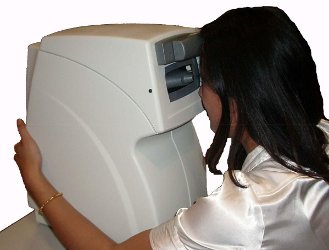
Growing recognition among leading ophthalmologists and glaucoma specialists of an alternative option for measuring pressure in the eye may offer new hope for four million Americans – and millions more people worldwide – who risk permanent blindness, says a co-author of a recent article in the Survey of Ophthalmology.
Home Eye Pressure Monitoring Recommended
Millions of people around the world should be monitoring their eye pressure (intraocular pressure) at home, according to health organizations (such as International Society for Self-Tonometry (ISST)) that are issuing recommendations on what to do and how to do it. Many experts, such as Dr. Graham Lee, feel the evidence is quite strong that home eye pressure monitoring leads to better control of intraocular pressure, and the evidence is quite strong that intraocular pressure control lowers the risk of glaucoma progression and optic nerve cell death.

Intraocular Pressure in a Spiritual Context
Recently here on FitEyes, readers have asked about the relationship between intraocular pressure about meditation. That prompted me to write this post about some of the broader spiritual aspects of what I do as well as how I view intraocular pressure in my own life and in my work as a Serene Impulse teacher.
Meditation and spirituality are often perceived as soft, delicate, wishy-washy, "New Agie", etc. My own approach is hard-core and scientific. It is also great fun. The path is filled with bliss and love -- and lots of IOP data!

Buy A Tonometer Through FitEyes.com
For those of you who have been thinking about joining our self-tonometry program and purchasing a tonometer, I want to let you know that we can help you purchase your tonometer. This is done through an exclusive arrangement supported by a glaucoma patient who has been a benefactor to the FitEyes community from the earliest days. His company has arranged for our self-tonometry group to receive large discounts on tonometers (through an exclusive arrangement with a top tonometer manufacturer).
IOP under anesthesia
Hi Dave, I am a student of anesthesia and am doing research on IOPs in patients who are in head-down positions for surgery. We are finding at our institution that even in patients without glaucoma, significant increases in IOP are occurring during longer procedures and may be associated with increased risk of post-operative blindness or partial visual loss. I am part of a team studying this issue and my specific offshoot of the research is on patients who present with glaucoma. Finally, my question: Are you aware of any information/ literature/ etc about glaucoma patients related to the surgical experience? Or 'optimization' of the glaucoma patient prior to surgery.
Calling All Side Sleepers
For those of you who have been life-long side sleepers: is your glaucoma and hearing (for those of you who suffer from tinnitus or are hard-of-hearing in one ear) worse on the side on which you sleep?
By the same token, for those of you who sleep on your backs; is there a large or small IOP differential between your eyes?
Nothing scientific about this query; just simple curiosity.
Darkened Room Effect
Here's what happens when I go to the movies.
I can experience a similar, though lesser, effect after driving at night for a prolonged period of time.
Effect of Diet and Other Environmental Factors on IOP
I've been performing systematic self-tonometry as well as taking regular blood pressure readings for four months now. As Dave predicted I would, I've made several personal discoveries by simply gathering data and letting the findings rise to the top.
Recruiting patients for a one day study looking at the effects of different spectrums of light on intra-ocular pressures
Glaucoma study
Dietary Amines and Free Glutamates
Curious to know if anyone has consistently experienced what I have with relation to dietary amines (particularly histamine and tyramine) and/or free glutamates: namely, a marked increase in IOP approximately three hours after eating foods with these properties.
EDIT: see the follow up here: Effect of Diet and Other Environmental Factors on IOP

Self–tonometry Article Makes List of Most-Read Medical Papers of 2009
From MDLinx Ophthal Newsletter. See number 27 on the list.
Top-Read Clinical Articles of 2009 in Ophthal/Glaucoma
Most read articles from 64 contributor journals (see the list)

Detective Work Required - Eye Pressure Going Up While On Relaxing Vacation
For many glaucoma patients, a vacation can present an opportunity to do some good thinking, maybe reflect on our direction in life or mentally solve some important questions that have been in the back of our mind but ignored because of our busy schedules.
On my own recent vacation I started thinking about new career directions. And yesterday I received a phone call from a good friend of mine who was vacationing on a tropical island. He told me all about swimming in the ocean, jogging on the beach and eating healthy food. All of it sounded fun, relaxing and healthy. But he was perplexed by one thing -- his intraocular pressure was going up in spite of being on a relaxing vacation in a tropical paradise.

Intraocular Pressure: It's the data, stupid
The following post is adapted from "A Deluge of Data Shapes a New Era in Computing" By JOHN MARKOFF, published: December 14, 2009 in The New York Times.
http://www.nytimes.com/2009/12/15/science/15books.html?_r=1&pagewanted=p...
Top computer scientists say we have entered the age of data-intensive scientific discovery. Dr. Gray, who was a database software pioneer and a Microsoft researcher, called the shift a “fourth paradigm.” The first three paradigms were experimental, theoretical and, more recently, computational science.
Intro from a newbie
I have been under the care of a glaucoma specialist for many years as a precaution because of strong family history of both this disease and other eye problems. My vision was always so good that I never was concerned. Then in 1999 and again in 2000 I had surgery both on eyes for detached retinas. Thankfully these went well. I continued my regular consultations with the glaucoma specialist. My condition remained unchanged over all these years. I felt all would be OK because I was living a healthy lifestyle, using my drops and getting regular exams. Then I noticed some vision loss in my left eye several months ago (confirmed by visual field). My doctor wanted to perform laser surgery because he said that IOP of 20 was to
A New Holistic Perspective on Glaucoma & Ocular Hypertension
by
Lions Clubs International celebrate World Sight Day
Tema, Oct 13, GNA - Lions Clubs in Ghana at the weekend organized a special eye-screening exercise in Tema to commemorate this year's World Sight Day under the theme: "Gender and Eye Health-Equal Access to Care".
Oil Pulling
This claims to be a miracle cure for everything. Does anyone with tonometer have any experience with how this affects IOP?
Thanks,
- Girish.
The effect of hormone replacement therapy (HRT) on intraocular pressure (IOP)
Objectives: To evaluate the effect of hormone replacement therapy (HRT) on intraocular pressure (IOP) in menopausal women.
Fluctuating Intraocular Pressure
NOTICE: If you are engaged in self-tonometry and you have questions about your daily intraocular pressure fluctuations, you should read this comment about the difference in the way fluctuations are defined by mainstream ophthalmology and the fluctuations we observe in self-tonometry.
I will further preface this article by saying that I do not believe there has been a study done where subjects with normal, healthy eyes performed self-tonometry the way we are doing it.
I urge caution in comparing self-tonometry data against the data being discussed by Dr. Rick Wilson below.
It is good to try to understand as much as we can. However, I believe it is not good to misinterpret your own self-tonometry data -- or to jump to incorrect conclusions based on the apples and oranges fallacy.
-- admin
On Wednesday, May 18, 2005, Dr. Rick Wilson a glaucoma specialist at Wills, and the glaucoma chat group discussed "Fluctuating IOP's."
Moderator: Tonight's topic concerns fluctuating intraocular pressures (IOPs). In a recent chat, you said studies have shown that fluctuating IOPs are more of a risk factor than a somewhat higher, but steady IOP. Why is that?
Dr. Rick Wilson: We are not sure. Several studies have shown glaucoma patients do not auto-regulate their circulation as well as patients without glaucoma. In other words, if a patient's blood pressure increases suddenly, it pushes more blood into the eye, and the added blood flow and pressure cause more aqueous to be made. A normal eye would sense the change and constrict the blood vessels to reduce the flow of the blood under higher pressure back to normal.
P: Is that called "autoregulation?"
Dr. Rick Wilson: Correct. Autoregulation should take place with decreased blood flow or pressure, increased metabolic needs of the eye, etc. Clearly, a fluctuating IOP requires the eye to continually auto-regulate the blood flow to keep the optic nerve well supplied with oxygen and nutrients. That may be onerous for the glaucomatous eye.
P: Isn't some amount of IOP fluctuation normal even in healthy eyes? For example, aren't pressures expected to be higher in the morning than in the later part of the day? In any case, how much of a spread in IOP is considered normal?