You are hereEye Pressure
Eye Pressure
Mental, emotional and lifestyle factors are the powerful IOP influencers
I am learning so much more about these patterns and their effect on my IOP all the time. Recently, I had a major emotional crises with my family of origin concerning a simple misunderstanding and lack of communication. As a result my only sibling (sister) said she wasn't speaking to me again, and we have generally been fairly close. Interestingly, my eye pressures did not rise in the first couple of days (though the stress was off the charts). However, after a couple of days, my eye pressures went crazy, and even with lumigan, I could hardly get them below 20s.
Why guess about your eye pressure when you can know?
I have had my tonometer for almost 6 months. It has answered a multitude of questions about how my daily routine affects my health. I didn't know, for example, that just taking a walk outside for a half hour or so would reduce my eye pressure, sometimes by as much as 50%. I also didn't know that I wasn't one of the people whose pressures are higher at night--in fact my lowest pressures are at night. (That was good news. I was tired of sleeping with my head elevated).
I have found no supplements that had any effect on lowering my IOP, but I have found that some supplements will raise my IOP quite significantly. I know that out of control thoughts and periods of stress significantly raise my IOP in spite of the two drops I am using or any other healthy lifestyle choices I am making.
Read more...
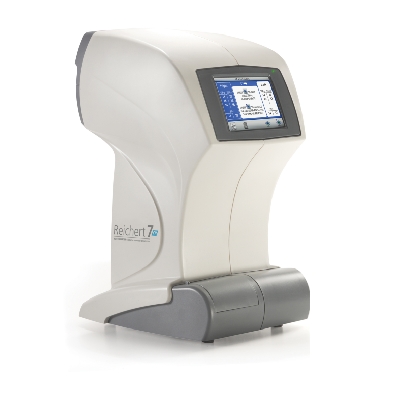
I love my new Reichert 7CR
First of all, from the bottom of my heart, I have to thank Dave for leading me to my purchase of the Reichert 7CR; what a fantastic instrument!
Several years ago, my ophthalmologist said that I probably had what is called "normal pressure" glaucoma; my pressure was usually 15-16 whenever he checked me, and the highest he ever recorded was 19 on my right eye. He told me to find a glaucoma specialist, so I did.
I went to the specialist for a couple of years, but several things discouraged me from continuing to see him. I found another ophthalmologist; she was somewhat younger and, I thought, perhaps less apt to be running a Speede Oil Change type of service, to see how many people she could get through her clinic in a day. She was a bit better at the latter, but she refused to give me a prescription for a tonometer. I left her and quickly acquired a tonometer prescription; and by the way, the requirement for a prescription for a non-contact tonometer is as silly as the need for me to have a real estate broker's license to sell real estate, or for a city to have building inspectors.

Are handheld or portable tonometers appropriate for home eye pressure monitoring?
In any tonometer (based on today's technology), you can have some, but not all of, the following:
- ease of use
- accuracy (reliability and validity of data)
- low cost
- portability
People tend to give a priority to portability and low cost. New products aimed at this feature set have recently been announced. Does it make sense to utilize those devices for self-tonometry?
We have to agree that any trade off that doesn't include reliability and validity of IOP data invalidates the whole endeavor of self-tonometry. Not only is it meaningless to do it if the data is not of sufficient quality upon which to make important decisions, but it could actually be detrimental to do self-tonometry in that case.
With today's technologies, portability entails user-alignment (in the context of self-tonometry). Proper user-alignment to produce a valid measurement, by definition, depends upon user skill as well as various specific conditions of each measurement. User-alignment, regardless of the tonometer, is difficult! (User-alignment is defined as the operator of the tonometer having to align the tonometer with the eye manually. Alignment is a very precise process requiring a steady hand, good eyesight, training and practice.)
Therefore, the requirement of user-alignment conflicts with the requirement of reliability and validity of IOP data. We cannot guarantee reliability and validity of IOP data when variable user skills are required to produce that data.
If any decent ophthalmologist or scientist (or intelligent thinker) considers a set of IOP data, they must consider how the data was obtained. If patient skill played a critical role in producing that data, as it does when user-alignment is required, the clear thinking person will immediately discount that data. Therefore, the self-tonometrist's efforts may not produce much of value.

Leading Medical Specialists From Around the World Coalesce Around Self-Tonometry
Leading Medical Specialists Support Self-Monitoring of Eye Pressure by Glaucoma Patients;
Self-tonometry has Potential to Transform Glaucoma Treatment, Says Co-Author of Recent Journal Article
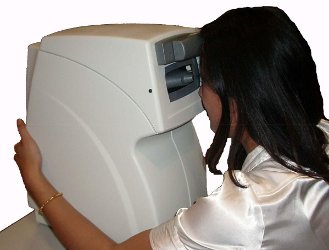
Growing recognition among leading ophthalmologists and glaucoma specialists of an alternative option for measuring pressure in the eye may offer new hope for four million Americans – and millions more people worldwide – who risk permanent blindness, says a co-author of a recent article in the Survey of Ophthalmology.
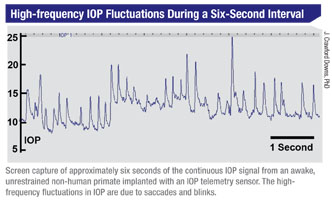
Home Eye Pressure Monitoring Recommended
Millions of people around the world should be monitoring their eye pressure (intraocular pressure) at home, according to health organizations (such as International Society for Self-Tonometry (ISST)) that are issuing recommendations on what to do and how to do it. Many experts, such as Dr. Graham Lee, feel the evidence is quite strong that home eye pressure monitoring leads to better control of intraocular pressure, and the evidence is quite strong that intraocular pressure control lowers the risk of glaucoma progression and optic nerve cell death.
I don't want my whole life to be consumed with intraocular pressure
I don't want my whole life to be consumed with IOP, but obviously most things that are good for our health in general are good for our eyes.
I have been tossed in the middle of the ocean and been told I better learn to swim!
Hello - I feel as though I have been tossed in the middle of the ocean and been told I better learn to swim! I've been a glaucoma suspect for 15 or 20 years. I'm now a "strong" suspect and have some damage in both eyes. My pressure is now 21 and 22. From what the doctor has said, I won't be surprised if he puts me on drops next time.
I'm now going in for pressure readings every 3 months.
Self-tonometry makes such good sense, but my glaucoma specialist doesn't seem to understand why I would want to do that or why it would be beneficial. So - I'm gently "chipping away" at him and perhaps I will someday get his permission.
Can you feel your eye pressure before checking with the tonometer?
As a user of tonometry are you aware of your IOP before you do the tonometer. That is, can you feel what your IOP is likely to be before you check the pressure based on your activity before checking or your mood or emotional state?
I ask this since some people have said that they sense when their IOP is higher than usual ie., they feel the pressure. Do you feel or sense the pressure and if so has the tonometer coincided with what you think your IOP might be?
Thanks
A
My story of my trabeculectomy
My drops were stopped when my pressure was 18 every 6 months. My pressure then went up and I kept asking to go back on drops but I was told there is no damage to my optic nerve. When the pressure reached 30 they said so sorry you now have optic nerve damage. And I have been bombarded with drops and my pressure got down to 14. After a while it went back up to 24 and I showed a bit more optic nerve damage. A trabulectomy was given as only option. My sight was 20 20 vision. To keep it I agreed to the operation. The operation has left me blind in that eye and in awful pain. My life has changed. I also have high pressure in other eye and am getting drops of tafluprost and cosopt.

Surely its perfectly normal for eye pressure to go up and down
surely its perfectly normal for eye pressure to go up under certain circumstances. Just like our bp goes up and down. anne
We now know that intraocular pressure does respond to events in our lives, to our state of mind and emotions and to stress. However, before FitEyes came along in 2006 (and for several years afterwards) these facts were not recognized.
See this FitEyes article from Feb 2007:
http://fiteyes.com/Does-Stress-Increase-Eye-Pressure-For-Everyone
The standard medical opinion is that stress does not affect eye pressure (intraocular pressure). For example, see "Glaucoma - Frequently Asked Questions" at The Eye Institute states:
"As far as we know, stress does not affect eye pressure or the health of the optic nerve."
Another example of the prevailing medical opinion can be found in a Wills Glaucoma chat transcript on Stress and Glaucoma from July 20, 2005:
Patient: Does being nervous or stressed increase the IOP (intraocular pressure) as it does blood pressure?
Dr. Elliot Werner: Not as far as we know.
Even today many ophthalmologists will deny that stress affects intraocular pressure. They will further deny that non-stressful events such as Bailey described could affect eye pressure.

How emotions affect eye pressure--Excitement
I learned about emotions and eye pressure, in part, by watching my favorite sports and measuring my eye pressure over a period of years. See Watching Tour de France Raises IOP.
Here is what I discovered after monitoring my eye pressure before, during and after watching sports over a period of several years.
- If you watch a sports event that you don't care about at all, it has almost no effect on your eye pressure.
- If you watch a sports event where your ego is caught up in the outcome of the event (i.e., you are attached to an outcome, such as your team should win) the excitement will raise your IOP.
- If you watch a sports event where you appreciate the action, enjoy the skill of the participants, etc. and are not attached to the outcome, your intraocular pressure will be largely unaffected.
I need some way of measuring my nocturnal eye pressure
I need some way of measuring my nocturnal pressures. My daytime measurements are reasonably low most of the time, and relatively consistent. I want to start adjusting my medications (formulations, frequency, timing), but don't feel confident in doing this until I can take night time measurements.
I know this is a concern for just about everyone who has glaucoma. I'm surprised there isn't more discussion on FitEyes about how to take night time measurements, and how to interpret the data (I'm pretty sure I've read all that's there).
seeking explanation for my high eye pressure
hi my names robert, im from the uk, im 27 years old and have lived with ocd since i was about 14 years old. For some months i had been dealing with chronic hyperventilation which stressed me badly to the point where i felt that i could have had a break down due to the stress and took medication such as prozac, diazepam (only when i needed it) and went to a physiotherapist to help get my breathing back to normal.

List of all the things that affect eye pressure
I'd like to ask everyone with a tonometer and good eye pressure data to contribute comments to this post. What factors have we identified that affect eye pressure? I'm going to start the list informally with things that come off the top of my head. I'll revise and refine this list based on feedback from people with tonometers and good data. Thank you!
Reduces Eye Pressure
Eye pressure decrease with movement exercise like Qigong?
I wish to mention the technique Gyoshi Ho which is used in Reiki. This techinque is also known as eyes healing and heres a small description about this technique : http://www.aetw.org/d_gyoshi.htm
Is possible that Gyoshi Ho can reduce IOP?
Tonometer rental program?
I am thinking about renting a tonometer to monitor my eye pressure at home. Can anyone tell me more about the option to rent a tonometer.

Effect of Sleeping Posture on Intraocular Pressure
ARVO 2010
Abstract Title: Effect of Sleeping Posture on Intraocular Pressure
Author Block: A.H. Lai, M.H.Y. Wong, P.T.K. Chew, M. Singh.
Ophthalmology, National University Health System, Singapore, Singapore.
Keywords: intraocular pressure
Abstract
Purpose: To determine if head postures which may be
adopted during sleep has an effect on intraocular pressure (IOP).
Methods: The design of this study is of a prospective observational case
series. Adult subjects were recruited from general ophthalmology out-patient
clinic visits for non-glaucoma conditions. Exclusion criteria for the study

Eating eggplant does NOT reduce eye pressure in our tests
It has come to my attention that a number of people are reading the headline from our discussion about eggplant and intraocular pressure and coming to a conclusion without actually reading the article. That's not a good idea in this case.
Please read the article and the comments. Here's the link: Eating eggplant reduces eye pressure